
How to Quickly Free Stuck Pipe and Bit Bogging Downhole?
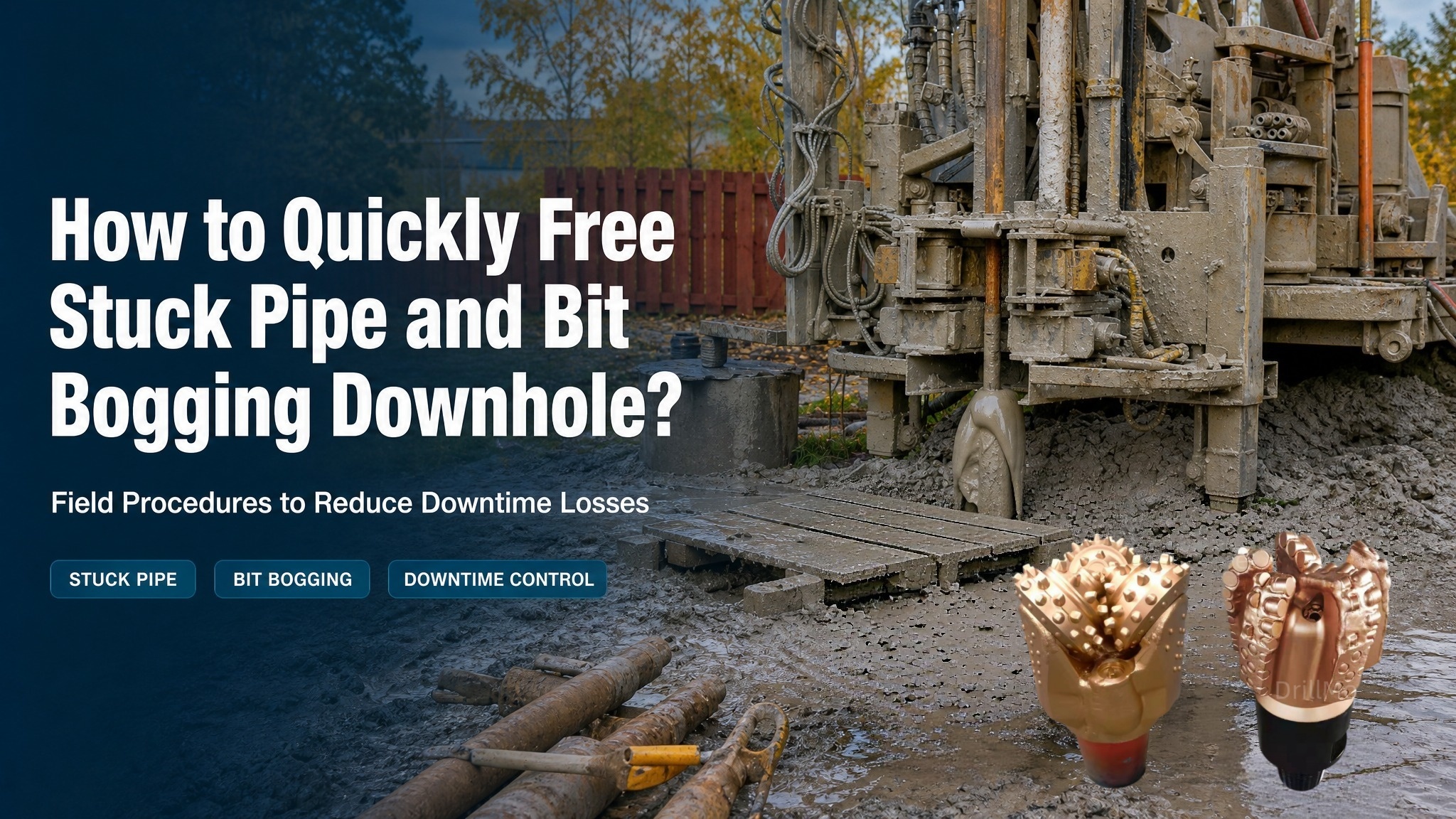
How to Quickly Free Stuck Pipe and Bit Bogging Downhole?
Stuck pipe and bit bogging are the most common downhole problems in drilling operations, and they are also major causes of schedule delays and cost overruns. These problems happen suddenly and unpredictably. Once they occur, drilling must stop immediately. Downtime can be as short as tens of minutes or as long as several days. It not only keeps consuming equipment rental, labor, and site costs, but if handled improperly, can also lead to major incidents such as wellbore collapse, drill string breakage, and wellbore abandonment, causing irreversible economic losses.
From visiting many sites, I have found that most small stuck-pipe and bit-bogging incidents turn into major downhole accidents not because the conditions are too complex, but because field emergency operations are not standardized. When a problem suddenly occurs, many crews’ first reaction is to force-pull the drill string, flush aggressively at high flow rate, or rotate hard at high torque. It may look like quick action, but it actually severely disturbs downhole conditions and makes an originally simple blockage or sticking point worse.
To handle the problem efficiently and safely, the first step is to accurately distinguish bit bogging from stuck pipe. The causes and handling logic of these two conditions are completely different, and they cannot be treated the same.
The core causes of bit bogging are bottomhole cuttings accumulation, bit nozzle plugging, and poor mud flowability. Typical field signs are clear: rotary table torque suddenly spikes, pump pressure fluctuates widely, and drill string lowering is restricted, but the drill string is not completely stuck and still has a small range of movement. For mild bit bogging, the correct response is to stop drilling immediately, keep the drill string stationary, and avoid continuing to add weight, which would worsen the blockage. Then slightly reduce pump rate, stabilize pump pressure, and rotate the rotary table at low speed. Rely on mud circulation to gradually wash the bit nozzles and accumulated cuttings at the bottom. After torque and pump pressure return to stable values, slowly test lowering the drill string. After confirming the downhole is clear, gradually resume normal drilling.
In cases of severe bit bogging and poor mud circulation, never blindly flush hard. The standard field procedure is to stop the pumps and let the well sit for 5 to 10 minutes so compacted cuttings at the bottom can settle and loosen. Then start the pump at a low rate and increase the pump rate in steps. Use multiple short circulations to open the mud channels and completely remove the bottomhole blockage. Strictly control torque and pump pressure throughout. Do not force rotation or aggressive flushing, to prevent drill string fatigue damage and wellbore collapse.
Stuck pipe is relatively more complex. It includes cuttings sticking, differential sticking, wellbore-diameter/tight-hole sticking, and other types. Its key feature is that pulling, lowering, and rotation of the drill string are all blocked, while pump pressure is stable and mud circulation is normal. Field handling must follow the principle of “simple methods first, complex methods later; non-damaging methods first, auxiliary methods later.” Never use brute force.
For cuttings sticking, which is common in the field, first use gentle drill string movement. Adjust the drill string position up and down slightly, intermittently rotate the rotary table at low speed, and maintain continuous mud circulation so that accumulated cuttings around the sticking point gradually loosen and fall away. Strictly control the movement range during this process. Do not pull or slack off suddenly or forcefully, to avoid locking the sticking point and escalating the incident. If gentle movement does not work, adjust mud properties in time: reduce viscosity and improve cuttings-carrying capacity. Use long-term circulation to clean residual cuttings from the wellbore and release the sticking point.
Differential sticking often occurs when the filter cake on the wellbore wall is poor and the drill string has been static for too long. The key is to break the adhesion between the drill string and the wellbore wall. In the field, you can periodically work the drill string gently and circulate mud intermittently to reduce the contact time between the drill string and the filter cake. When conditions allow, displace with low-solids, low-adhesion mud to weaken filter cake adhesion and gradually free the pipe.
For cases where the sticking point is fixed and conventional methods fail, accurately locate the sticking point, then use jars to assist in freeing the pipe. Strictly control jarring force and frequency, and operate according to procedures to avoid equipment damage.
After all stuck-pipe and bit-bogging freeing operations are completed, never resume drilling directly. You must perform full-well mud circulation and multiple short trips to thoroughly check hole clearance and wellbore stability. After confirming there are no residual sticking points and no cuttings accumulation, gradually resume drilling to prevent the problem from recurring.
For a drilling crew, standardized emergency response procedures can shorten downtime as much as possible, avoid secondary incidents, and reduce operational losses. Rather than emergency fixes after a problem occurs, optimizing the daily mud circulation program, stabilizing drilling parameters, and performing regular short trips to clean cuttings are the keys to reducing stuck pipe and bit bogging at the source.
Disclaimer: The stuck-pipe and bit-bogging freeing procedures described in this article are only applicable to conventional onshore and shallow-water drilling conditions. They are for reference and learning by field technical personnel only. Incident handling in complex ultra-deep wells, high-pressure oil and gas wells, and special-process wells must follow special operating procedures. Field operations must be performed by certified professionals. The platform and author of this article assume no responsibility for equipment damage, safety incidents, or economic losses caused by operations that violate regulations.
whatsapp:+86 193 18344123
Your email address will not be published. Required fields are marked with *


