
From Tricone to PDC: Why Changing the Bit Isn’t Enough
From Tricone to PDC: Why Changing the Bit Isn’t Enough
When a rig crew pulls a brand-new PDC bit after just 50 metres—cutters chipped, diamonds fractured—the natural reaction is to blame the technology. "This bit doesn't work in our ground," they say.But more often than not, the bit didn't fail. The operation did.The fastest way to destroy a PDC bit is to treat it like a tricone.
The Muscle-Memory Trap
Drillers who have spent years running tricone bits develop a deep, instinctive feel for the job. They know exactly how much pulldown pressure to apply, how to push hard to hit shift targets, and how to force the bit through the bench. With a tricone bit, high weight-on-bit (WOB) is the key to progress—the crushing and scraping action of the three rotating cones breaks down rock through impact and compression.
That instinct works perfectly—for tricone bits.
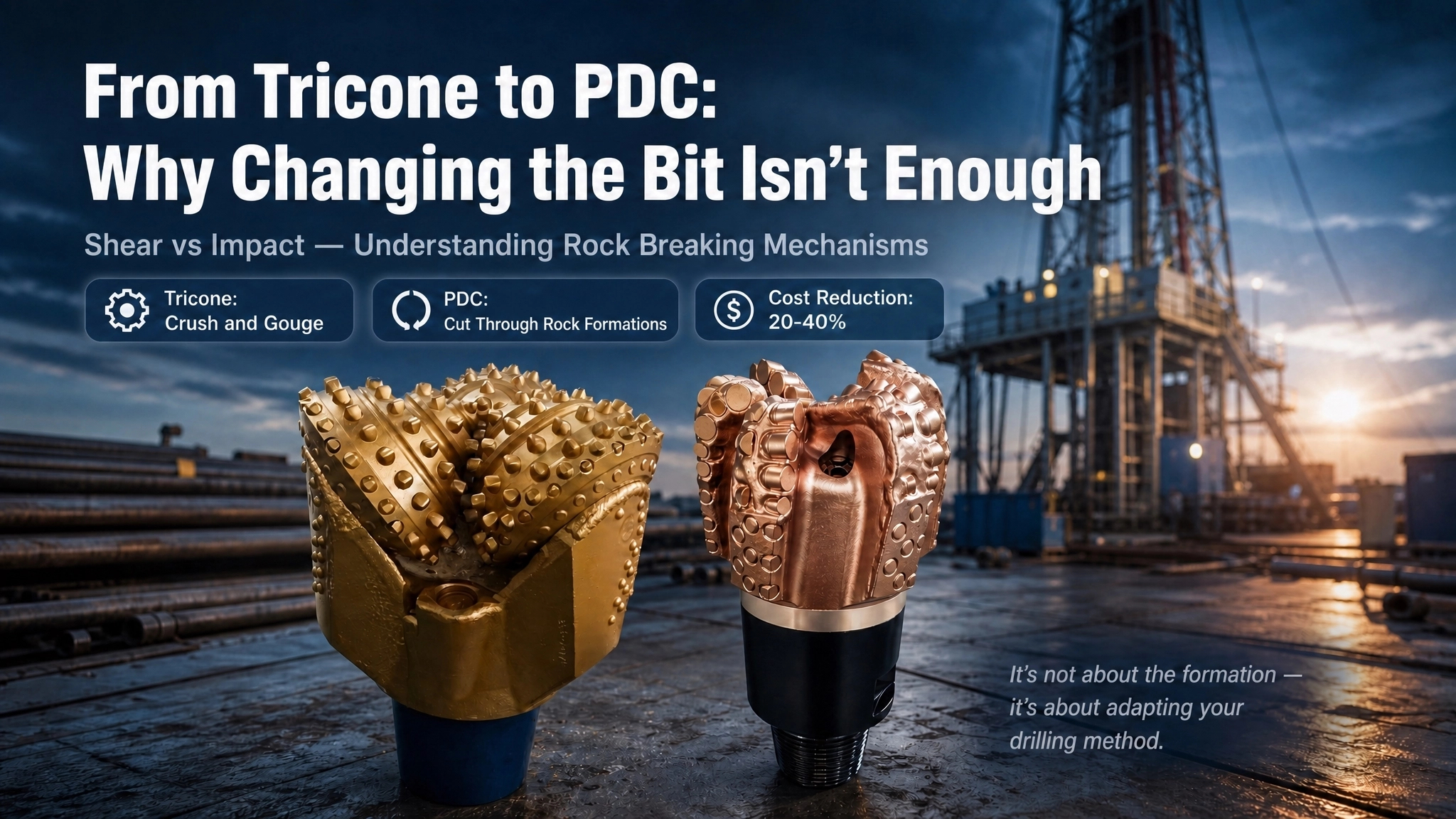
But PDC bits are fundamentally different. Unlike tricone bits that crush and gouge, PDC bits rely on a shearing action to cut through rock formations. Fixed cutter elements impregnated with synthetic diamond shear away the rock in a continuous cutting motion. When you drop a PDC bit into the hole and crank the pulldown pressure like it's a tricone, you don't drill faster. Instead, you overload the cutting structure.
Research has shown that PDC cutters are susceptible to chipping, cracking, and partial fracturing when subjected to high forces normal to the working surface—precisely the kind of forces generated by excessive downward force or WOB. Drilling interbedded formations, in particular, causes cutters near the nose of the bit profile to fracture from tangential overload, through the diamond table and the carbide support beneath. This is a failure mode entirely distinct from the wear patterns seen on tricone bits.
The mechanism is well understood in the literature: when a PDC cutter is overloaded, the polycrystalline diamond layer can peel off or become severely passivated. Even at relatively low WOB, PDC cutters still suffer from what might simply be termed "overloading," especially when aggressive cutting structures are employed. The shearing action that makes PDC bits so efficient in softer to medium-hard formations also makes them intrinsically sensitive to the mechanical properties of the rock and the parameters applied.
The Numbers Don't Lie
The performance contrast between the two bit types is stark. A sharp PDC bit can achieve rates of penetration (ROP) several times those of a tricone bit in comparable formations. Field data from a North American hard rock mine showed that upgrading from a conventional bit to a properly engineered 5-wing PDC design increased total footage per bit from 320 metres to 687 metres—a 114% improvement—while average ROP rose from 4.2 m/hr to 5.8 m/hr, and cutter chipping events dropped from two to zero. In another documented case, the transition from tricone to PDC bits in surface hole drilling delivered penetration rate increases of 30% to 100%, with single-run footage multiplied by two to five times.
The economic case follows logically. While a single tricone bit costs approximately $700–$2,800, a PDC bit of similar size carries a higher upfront price tag of roughly $2,100–$7,000, with some high-end customised models exceeding $14,000. But upfront cost is only part of the equation. PDC bits achieve lower total drilling cost per metre through faster drilling (less rig time), longer life (fewer replacements), and fewer trips (reduced downtime). The overall cycle cost can be 20%–40% lower than that of tricone bits.
What Success Actually Looks Like
Making PDC bits succeed across a fleet isn't a simple workshop swap. It demands a genuine culture shift on the bench.
The operating window for a PDC bit is fundamentally different from what tricone-trained crews are used to. PDC bits typically require lower WOB compared to tricone bits, as their shearing mechanism is inherently more efficient. Higher rotational speeds can enhance ROP, but must be balanced carefully against the risk of cutter wear. The sweet spot is a combination of moderate weight and higher rotation—letting the bit shear rather than forcing it.
Research has quantified these trade-offs. Studies on the effect of rotary speed and WOB on PDC cutter wear found that for limestone, the optimum range lies between 1,000 N at 21.4 RPM and 4,000 N at 85.6 RPM; for granite, the range is narrower, between 1,000 N at 21.4 RPM and 3,000 N at 64.2 RPM. In calcareous rocks, experimental optimisation identified significant ROP improvements at 160 kgf WOB and 152 RPM. The key insight is that PDC performance is not about piling on weight—it's about finding the right balance.
ExxonMobil's research on drilling interbedded formations with PDC bits emphasises that controlling the depth of cut, as opposed to controlling WOB, is the more effective strategy for avoiding structural overload of the cutters. When only part of the cutting structure is engaged with harder rock while the rest is in softer formation, excessive WOB can easily push individual cutters past their structural limit.
If you change the bit without changing the operating habits, you're just paying more to get the same broken cutters.
The technology is ready. PDC bits have proven their value across a wide range of formations, from soft shales to increasingly hard and abrasive rocks. But the transition requires more than a capital expenditure—it requires retraining, patience, and a willingness to let go of muscle memory built over years of running tricones.
A PDC bit carries a higher purchase price. But when the crew runs it within its true operating window—lower WOB, higher RPM, and the discipline to let shear do the work—the higher penetration rates and longer runs between changeouts drive the real drilling cost down.
The question isn't whether PDC bits work in your ground. The question is whether your crew is ready to work with them.
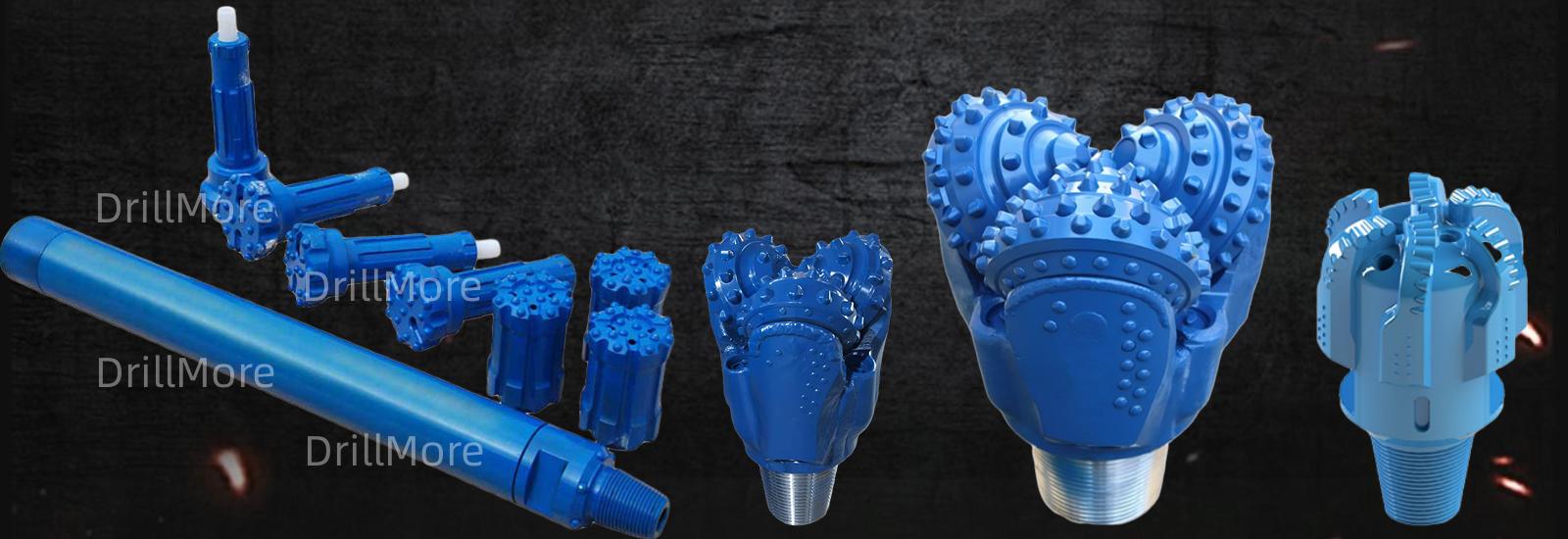
Drillmore specializes in producing tricone drill bits and PDC drill bits. We welcome all customers to inquire and request prices.If customers cannot locate required items on the website, they may reach out via email. The firm also maintains LinkedIn, Facebook and Instagram accounts for easier communication.


Your email address will not be published. Required fields are marked with *


