
The "heart" hidden inside the tricone:The bearing system
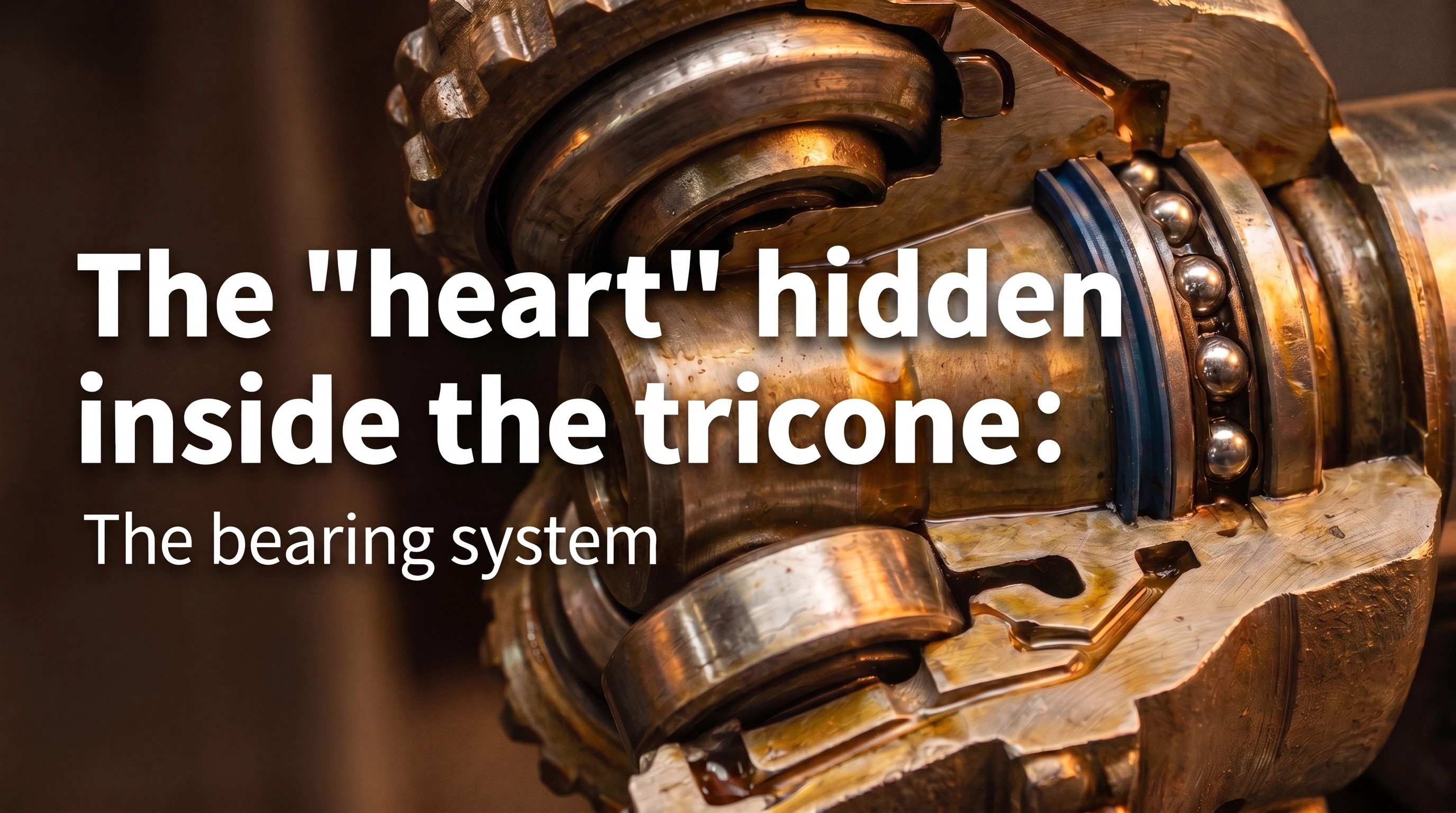
The "heart" hidden inside the tricone:The bearing system
Introduction
In oil & gas drilling, HDD horizontal directional drilling, water well drilling, and mining blasting hole projects, many field operators encounter a common dilemma: the tungsten carbide inserts or steel teeth of a tricone bit are still intact, yet the bit has to be pulled out and replaced ahead of schedule. Over 80% of premature tricone bit scrapping incidents root in damaged tricone bit bearings. As the critical load-bearing component inside every tricone roller cone bit, the bearing assembly bears massive weight-on-bit (WOB), continuous rotary friction, severe bottom-hole impact, and corrosion from drilling mud, cuttings, and high formation temperature. This article comprehensively breaks down tricone bit bearing types, working principles, failure causes, selection standards, and maintenance strategies to help drilling crews reduce tripping costs and maximize the service life of roller cone bits.
1. Core Functions of Tricone Bit Bearings
A complete tricone bit consists of three roller cones and a bit leg body. Each roller cone rotates independently around the journal of the bit leg, and the entire rotation and load-bearing function rely entirely on the internal tricone bit bearing system. The bearing set undertakes three extreme working loads simultaneously during drilling:
1. Radial heavy load: The full weight of drill string and applied WOB presses directly on the tricone bit bearings. For hard rock drilling with carbide insert tricone bits, a single bearing assembly may bear several tons of pressure continuously.
2. Axial shock load: Alternating soft and hard formations, uneven bottom-hole surfaces, and gravel cobblestones generate constant vibration and axial impact on roller cone bit bearings.
3. High-speed frictional heat: Rotary table or top drive equipment drives the tricone bit to rotate at hundreds of RPM, creating persistent metal-to-metal friction that generates high heat inside bearing chambers.
Simply put: the carbide inserts or steel milled teeth of the tricone bit crush rock formations, while tricone bit bearings guarantee normal roller cone rotation. Once the bearing suffers seizure, excessive abrasion, or seal leakage, the roller cone will lock up and stop spinning. Even the most wear-resistant hard alloy inserts become useless, leading to complete tricone bit failure.
2. Four Main Types of Tricone Bit Bearings & Applicable Drilling Scenarios
The drilling industry classifies tricone bit bearings by internal friction structure and sealing configuration. Four mainstream bearing designs cover all common drilling applications, from shallow water wells to deep oil well hard rock drilling:
2.1 Open Roller Bearing (Non-Sealed Roller Bearing Tricone Bit)
Working Principle
This tricone bit bearing design has no independent sealing structure. Circulating drilling mud flows directly into the bearing chamber to complete lubrication, cooling, and cuttings flushing. Internal roller bearings and steel ball retaining structures support roller cone rotation.
Advantages
Low manufacturing cost, simple internal structure. Continuous mud circulation provides stable heat dissipation, suitable for short-duration shallow borehole drilling.
Disadvantages
Sand and rock cuttings carried by drilling mud directly invade the tricone bit bearing pair, accelerating abrasive wear. Service life drops sharply in highly abrasive hard formations.
Matching Drilling Conditions
Shallow domestic water well drilling, soft clay and shale short-section boreholes, low-budget quick-completion small-scale drilling projects. Most IADC 117, IADC 127 steel tooth tricone bits adopt open roller bearing systems.
2.2 Sealed Roller Bearing (Rubber O-Ring Sealed Roller Bearing Tricone Bit)
Working Principle
Nitrile rubber O-ring seals are installed at the contact gap between roller cones and bit legs, forming an isolated bearing chamber pre-filled with high-temperature special lubricating grease. The sealed cavity blocks mud and solid impurities from contacting bearing components. Internal cylindrical rollers disperse radial pressure, lowering friction resistance to support medium-high rotary speed.
Advantages
Rubber seals effectively isolate sand and debris, and long-life pre-filled grease delivers consistent lubrication. The service life of sealed roller tricone bit bearings is over 50% longer than open roller bearings, extending tripping intervals and cutting downtime losses. The bearing assembly fits a wide range of rotary speed parameters.
Disadvantages
Higher procurement cost than open tricone bit bearings. Roller bodies are prone to fatigue pitting under ultra-heavy WOB overload conditions.
Matching Drilling Conditions
Medium-deep water well drilling, HDD horizontal directional crossing projects, medium-hard sandstone formations, and projects where frequent tripping causes heavy economic losses. Conventional IADC 517, IADC 537 tungsten carbide insert tricone bits are standard-equipped with this sealed roller bearing system.
2.3 Sealed Journal Sliding Bearing (Journal Bearing Tricone Bit)
Working Principle
This tricone bit bearing cancels internal rolling rollers. Wear-resistant alloy floating bushings are installed between the bit leg journal and roller cone inner wall to form a large-area sliding friction pair. Double composite metal-rubber sealing structures lock a large volume of lubricating grease inside the bearing cavity. The thick oil film buffers formation impact without rolling body fatigue loss.
Advantages
Extreme load-bearing capacity, top-tier anti-shock and anti-vibration performance. Uniform abrasion across the large sliding friction pair delivers outstanding stability in hard rock and cobblestone layers. Metal-sealed journal tricone bit bearings resist high bottom-hole temperatures for deep well drilling operations.
Disadvantages
Higher friction coefficient than roller bearings, prone to overheating under sustained ultra-high rotary speed. The tricone bit with journal sliding bearings carries the highest unit purchase price among all roller cone bit types.
Matching Drilling Conditions
Granite, limestone, cobblestone hard formation drilling, open-pit mining blast hole drilling, deep oil & gas well drilling, and all heavy WOB high-impact engineering projects. IADC 617, IADC 637 ultra-hard rock carbide insert tricone bits universally adopt sealed journal sliding bearing assemblies.
2.4 Air Drilling Special Bearing (Dry Drilling Tricone Bit Bearing)
Working Principle
Built-in air channels inside the tricone bit bearing rely on high-pressure compressed air for bearing cooling and debris removal, with no drilling mud lubrication required, exclusively designed for dry mining drilling.
Matching Drilling Conditions
Open-pit mine dry blast hole drilling, mountain borehole construction without mud circulation water supply. Rarely applied in civil water well and HDD crossing drilling.
3. Roller Bearing VS Journal Sliding Bearing: Core Comparison for Tricone Bit Selection
Comparison Item | Sealed Roller Tricone Bit Bearing | Sealed Journal Sliding Tricone Bit Bearing |
Load-Bearing Capacity | Medium, fits low & medium WOB drilling | Ultra-high, priority for heavy load & impact hard rock formations |
Rotary Speed Adaptability | Low friction loss, stable performance under high RPM | Smooth at low speed, easy thermal accumulation under over-high rotary speed |
Service Life Performance | Superior longevity in soft & medium-hard sandstone layers | Dominant wear resistance in abrasive granite, cobblestone ultra-hard formations |
Comprehensive Drilling Cost | Moderate bit unit price, high overall cost performance | Higher single bit cost, offsets expenses via fewer tripping & bit replacement cycles |
Matching IADC Bit Series | IADC 1~5 series steel tooth & medium-hard carbide insert tricone bits | IADC 5~7 series hard & ultra-hard rock tungsten carbide insert roller cone bits |
4. Four Primary Root Causes of Premature Tricone Bit Bearing Failure
Field drilling statistics confirm that 80% of early tricone bit scrap events stem from bearing assembly damage. Four on-site operation mispractices cause most tricone bit bearing failures:
4.1 Seal Damage & Drilling Mud Infiltration (Most Common Failure Mode)
Casing step impact during tripping out, direct hoisting collision on bit legs, and metal debris dropped at the bottom hole will scratch rubber or metal bearing seals. Once sand-laden mud penetrates the sealed bearing chamber, solid particles grind roller bodies, journals, and bushings continuously, leading to rapid roller cone seizure within a single drilling run.
4.2 Overloaded WOB & Excessive Rotary Speed Beyond Bearing Design Limits
Operators blindly increase weight-on-bit to boost ROP (rate of penetration), pushing tricone bit bearings past their rated load limit and triggering fatigue spalling on roller components. Sustained over-high RPM accelerates lubricating grease carbonization from excessive heat, eliminating the grease's friction reduction function and burning out the entire bearing assembly.
4.3 Excessively High Mud Sand Content & Insufficient Bearing Cooling Flow
Open tricone bit bearings fully depend on circulating mud for debris cleaning. High-solids drilling mud creates persistent abrasive wear on internal bearing pairs. For sealed roller cone bits, blocked bit nozzles reduce mud flow volume, cutting heat exchange efficiency and causing rapid bearing grease deterioration under continuous high temperature.
4.4 Non-Standard Tripping & Hoisting Operations
Stopping drill string rotation during pull-out creates unilateral extrusion pressure on the steel ball locking structure of tricone bit bearings. Directly binding steel wire ropes around roller cones during hoisting squeezes bearing seals out of shape and triggers permanent grease leakage.
Early Warning Signals of Damaged Tricone Bit Bearings (Timely Tripping Reduces Drilling Loss)
(1)Drilling rig torque rises continuously and abnormally, accompanied by severe whole-string vibration during penetration;
(2)ROP drops sharply, with no penetration improvement even after increasing applied WOB;
(3) After tripping out, individual roller cones rotate sluggishly with obvious radial play, and mud leakage traces appear at bearing seal gaps.
5. Practical On-Site Techniques to Extend Tricone Bit Bearing Service Life
All optimization methods are directly applicable to drilling site operation standards, minimizing bearing loss and maximizing roller cone bit utilization:
5.1 Match Tricone Bit Bearing Type to Actual Drilling Formations, Reject Blind Low-Cost Procurement
Select open roller bearing tricone bits for shallow soft soil boreholes; deploy rubber sealed roller bearing roller cone bits for sandstone and HDD crossing projects; choose sealed journal sliding bearing carbide insert tricone bits directly for granite and cobblestone hard rock layers. Although journal bearing bits carry higher single-unit prices, they deliver 2~3 times longer single-run footage than open bearing bits, cutting multiple tripping and bit replacement downtime to lower total construction expenditure.
5.2 Strictly Control Drilling Parameters to Avoid Tricone Bit Bearing Overload
Operate within the WOB range recommended by tricone bit manufacturers, avoiding instantaneous violent weight surges. Prioritize sealed roller bearing tricone bits for high-RPM drilling scenarios, and appropriately reduce rotary speed when running journal sliding bearing roller cone bits.
5.3 Optimize Drilling Mud Solid Control Systems
Install desander and desilter equipment to lower mud sand content, keep bit nozzles unobstructed, and guarantee sufficient circulating mud flow to maintain continuous cooling for internal tricone bit bearing assemblies.
5.4 Standardize Bit Hoisting, Storage & Trip-In Operating Procedures
Use dedicated bit lifting subs for tricone bit hoisting, never bind steel ropes around roller cones. Store spare roller cone bits in dry anti-rust environments to prevent premature rubber seal aging. Lower the drill string slowly during trip-in to avoid bottom-hole step impact scratching bearing sealing surfaces.
5.5 Complete Bearing Inspection & Maintenance After Every Drilling Run
After pulling tricone bits out of the borehole, inspect bearing seals for cracks and damage, and check if all three roller cones rotate smoothly. For repairable roller cone bits, replenish high-temperature bearing grease and replace damaged sealing components for repeated service, drastically cutting consumable procurement costs.
6. Conclusion: Calculate Comprehensive Drilling Cost Instead of Only Comparing Tricone Bit Unit Price
Most drilling procurement teams only compare the single purchase price of tricone bits while ignoring the hidden costs brought by short bearing service life, including tripping time, rig idle fees, labor costs, and auxiliary equipment wear. A journal sliding bearing carbide insert tricone bit matched to hard rock formations achieves far longer single-run footage than low-cost open bearing roller cone bits. Fewer repeated tripping and bit replacement operations directly reduce overall drilling project expenditure.
The bearing assembly is the invisible core component of every tricone bit. Mastering tricone bit bearing structures, selecting the correct bearing type matching formation conditions, and implementing standardized drilling operation protocols can fully unlock the rock-breaking performance of carbide inserts and steel milled teeth, while maximizing the full service cycle of roller cone bits. Optimizing tricone bit bearing utilization is one of the most accessible and efficient solutions for drilling contractors to realize cost reduction and efficiency improvement.

Your email address will not be published. Required fields are marked with *


