
How does the drill rod affect the performance of a DTH hammer?
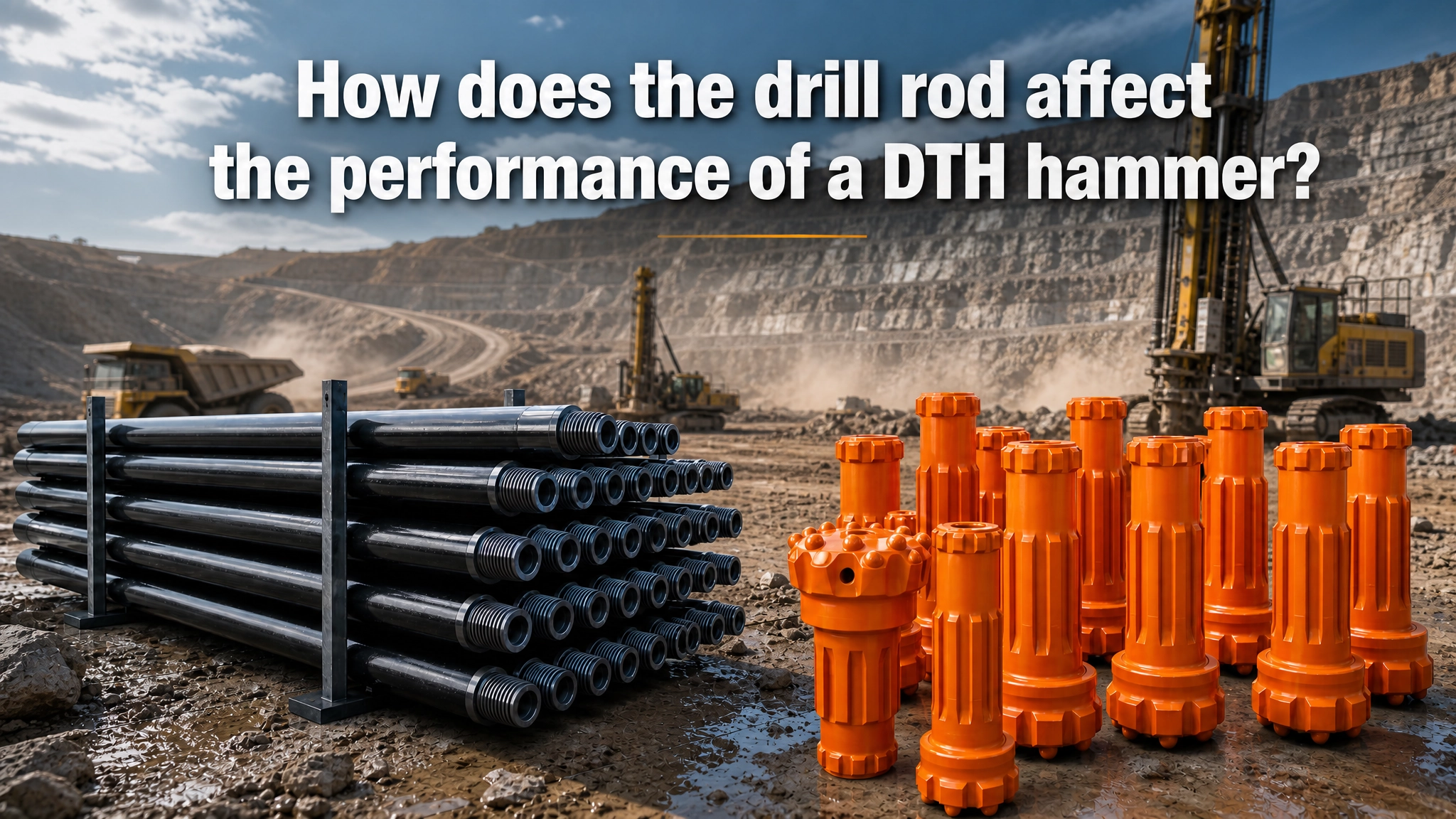
How does the drill rod affect the performance of a DTH hammer?
The drill rod is something you really can't do without when you're running a DTH hammer. How it's made and how well it performs can make a big difference to your whole drilling operation. Let me walk you through the main ways it affects things.
1. Transmission of Energy
The drill rod's main job is getting the energy from the DTH hammer down to the drill bit. The hammer creates high-frequency impacts, and those need to travel through the rod to actually break the rock.
Good drill rods use special alloy steels that are strong and tough — they move that impact energy efficiently without losing much along the way. A rod with proper heat treatment and a consistent cross-section keeps the energy flowing smoothly. A low-quality rod, on the other hand, can eat up a lot of that energy due to internal defects, and then your drill bit just isn't hitting hard enough.
Length and diameter matter too. Go too long and the energy drops off before it even reaches the bit. Diameter affects stiffness — you want something that holds its shape under all those high-frequency impacts.
2. Stability and Alignment
The drill rod keeps everything straight and stable while you're drilling. That's especially important when you need accurate hole placement — mining, construction, geothermal work, all of that.
If the rod is bent or warped, the hammer starts deviating from where you want it to go. You end up with uneven wear on the drill bit and lower efficiency overall. Connection points between rod sections also matter — if they're loose, you get vibrations that mess with accuracy and can damage your hammer components over time.
The rod also needs to handle lateral forces, especially when you're going through hard or uneven formations. High lateral stiffness keeps the DTH hammer where it's supposed to be.
3. Flushing and Cooling
Drilling generates a lot of heat, and rock cuttings need to get cleared out constantly. That's where the drill rod's central passage comes in — compressed air or flushing fluid runs through it to cool the hammer and push the cuttings out.
The passage needs to be wide enough and smooth enough to keep the flow rate up. If it's too narrow or rough on the inside, the fluid gets restricted, cuttings build up in the hole, and your hammer starts overheating. That leads to premature wear and eventually failure.
4. Wear and Fatigue Resistance
The drill rod takes a beating — constant impacts, vibrations, abrasion against the rock and hole wall. So it needs to be built to last.
A hard outer coating, like carbide, helps a lot with abrasion resistance and extends the rod's service life. Fatigue resistance is just as important though, because those repeated high-frequency impacts can cause cracking over time. Good material selection plus proper heat treatment and forging processes are what make the difference. A rod that fails mid-operation means downtime, and that gets expensive fast.
5. Compatibility with DTH Hammers
The drill rod has to match your DTH hammer — size, connection type, the whole thing. Getting this wrong causes problems.
Diameter and length need to fit the hammer's specs. Too small and you lose energy transfer. Connection type matters too — threaded or quick-connect, it has to match and it has to be properly tightened. A loose connection is a source of vibration and instability you really don't want.
Bottom line: the drill rod touches every part of how well your DTH hammer performs. Get it right and you're looking at better efficiency, more accurate holes, and lower overall costs.
WhatsApp:https://wa.me/8619318344123
Your email address will not be published. Required fields are marked with *


