
Understanding Different Types of Drill Bits
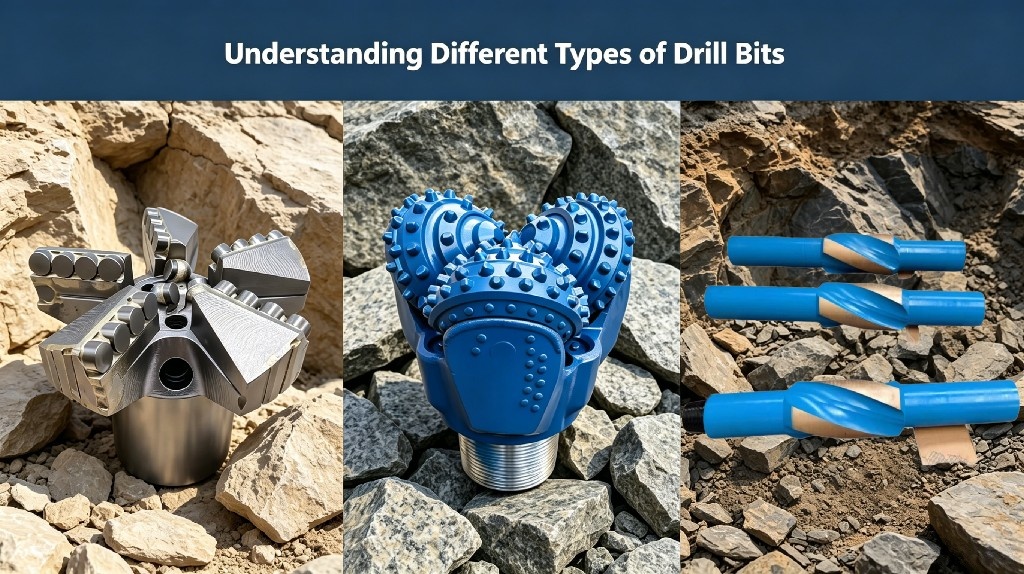
Understanding Different Types of Drill Bits
Ground conditions in drilling are always complicated and ever-changing. A single well hole often goes through layers of clay, sand, shale, limestone and hard rock. Each type of ground needs a corresponding drill bit and drilling method. Choosing the right drill bit is essential to keep a good drilling speed, reduce unnecessary downtime, and protect expensive drilling equipment.
This article helps you understand common drill bit types, their suitable ground conditions and working features.
Variable Ground Conditions in Drilling
In drilling work, it is common to meet different soil and rock layers within the same well. The ground may change slowly or suddenly as drilling goes deeper.
Typical formations include:
Soft clay and unconsolidated soils, sand and loose sediments, shale & limestone, hard rock formations, fractured and mixed ground layers.
Each formation reacts differently to drilling. In actual construction, the underground ground often changes within a short distance, and one single well usually passes through several different rock layers.
If you use the wrong drill bit, you will face slow drilling speed, serious bit wear, stronger vibration and torque, equipment damage, and extra cost from downtime. So choosing the right drill bit is very important for all drilling projects.
Importance of Drill Bit Selection
Drill bit quality and type directly affect drilling efficiency and overall cost. A well-matched drill bit can speed up drilling, lower operating expenses and reduce equipment loss.
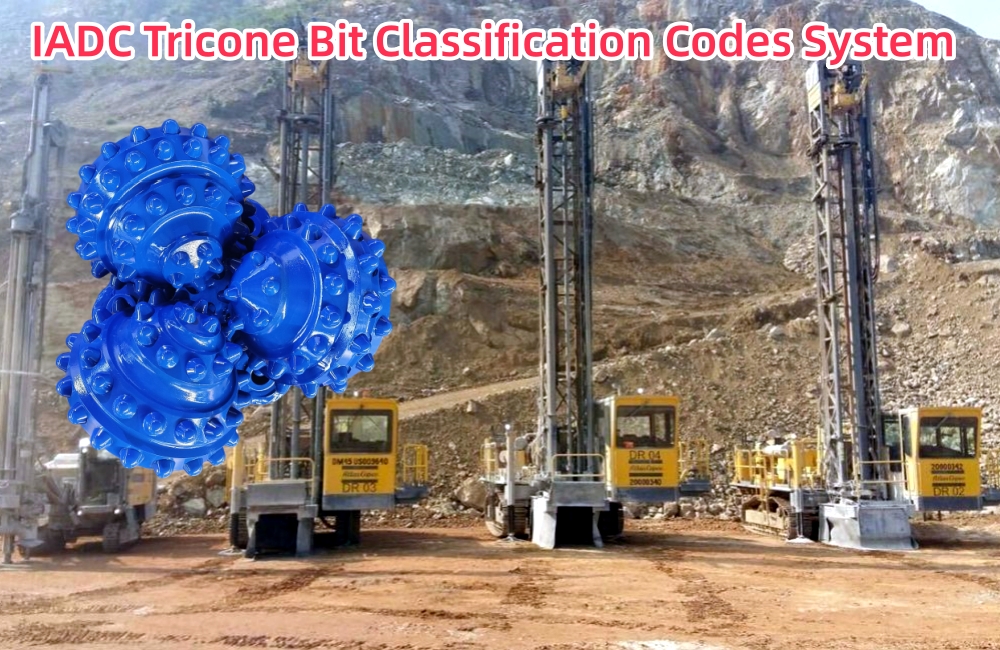
The International Association of Drilling Contractors (IADC) suggests bit selection should fully consider formation hardness, abrasiveness, borehole depth, required drilling speed, downhole temperature & pressure, hole size and hole stability. Since no two construction sites are exactly the same, drill bits must be chosen according to real underground conditions.
PDC Drill Bits for Mixed & Variable Formations
PDC drill bits are the most widely used option for mixed and changing formations.
They adopt synthetic diamond cutters to shear rock directly instead of crushing it. They work steadily and drill fast in sandstone, limestone, shale and mixed sedimentary layers.
Advantages of PDC Bits
High penetration rate, long cutter service life, smooth drilling performance, low vibration, and lower overall drilling cost.
There are two main structures:
- Steel Body PDC Bit: Strong impact resistance, easy to repair and refurbish after wear.
- Matrix Body PDC Bit: Made of tungsten carbide material, outstanding abrasion resistance, ideal for harsh formations.
Tricone Drill Bits with High Versatility
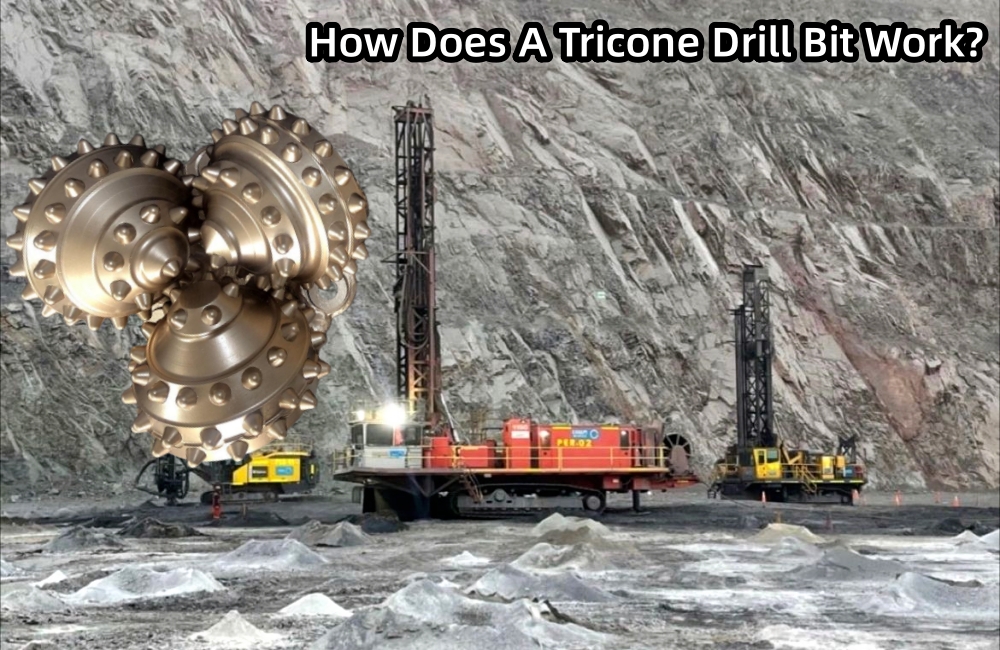
Tricone roller cone bits rely on three rotating cones to crush and grind rock. They can handle hard formations that may damage other ordinary drill bits.
Main application: Oil & gas drilling, mining drilling, water well drilling, deep borehole drilling.
The structural design evenly shares drilling force, keeping stable when passing through different materials. Multiple bearing types are available to match different well depths and complex working environments. Tricone bits are the first choice when formation changes frequently during drilling.
DTH Drill Bits for Hard Rock Formations
For extremely hard rock layers, DTH (Down-the-Hole) drill bits are the best choice.
The DTH hammer cooperates with the drill bit, delivering strong impact force directly to break hard rock.
Advantages
Fast penetration in hard rock, high energy utilization, less vibration on drill string, stable performance in deep drilling.
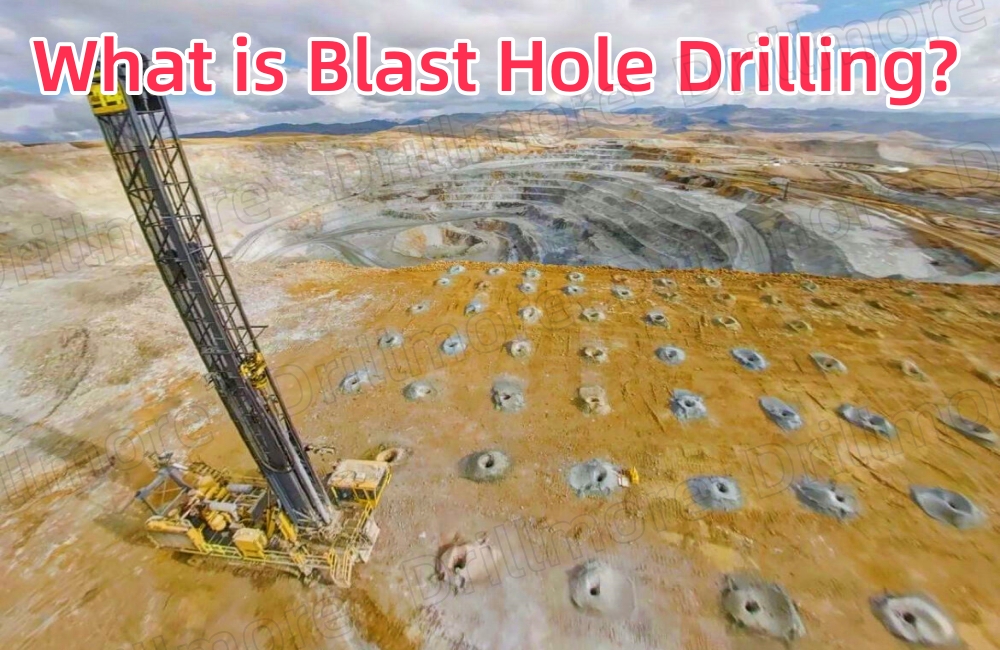
Widely used in mining drilling, quarry drilling, water well drilling and geothermal drilling.
Drag Bits for Soft & Loose Formations
For soft ground such as clay, sand and soft shale, drag bits are the most efficient option.
They use fixed blades to scrape and cut soft soil and rock, instead of heavy crushing. They cut quickly and discharge rock debris smoothly in unconsolidated loose formations.
Common types:
- Step Drag Bit: Perfect for clay and sand layers with strong cutting ability.
- Chevron Drag Bit: More durable, suitable for slightly harder formations like soft sandstone and compacted shale.
Common usage: Water well drilling, environmental drilling, geothermal exploration and mining exploration. For mixed ground layers, drag bits usually need to be used together with other types of drill bits.
HDD Solutions for Mixed Ground
Horizontal Directional Drilling (HDD) is a mainstream trenchless construction method, used to lay pipelines, power lines and communication cables without damaging the ground surface.
Standard construction process: Drill pilot hole → Ream the hole with hole opener → Pull back the pipeline.
It is widely used for crossing roads, rivers and urban areas. Choosing matched HDD drill bits and reamers ensures smooth hole expansion even when crossing mixed soil and rock layers.
DrillMore Factory Advantages
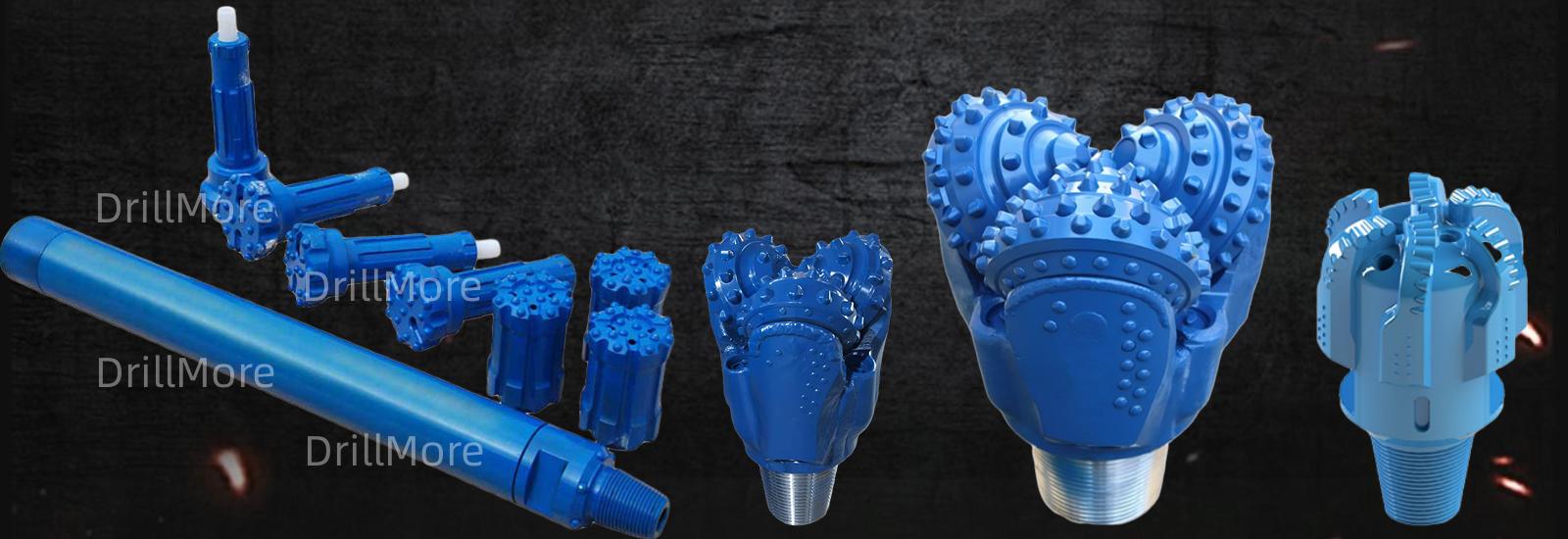
As a professional drill bit and drilling tools manufacturer, DrillMore owns complete production lines, mature R&D capabilities, and strict quality control systems. We supply a full range of products including PDC bits, tricone bits, DTH bits, drag bits, reamers and related drilling accessories.
We support customized design, OEM & ODM services, flexible MOQ, stable delivery time and competitive factory prices. With rich experience in water well drilling, mining, HDD and geological exploration projects, our technical team can also provide professional formation matching and drill bit selection guidance for global customers.
Choose DrillMore as your reliable long-term partner for one-stop drilling tool procurement.
Conclusion
From soft clay to hard rock, every formation needs a matched drill bit and rock breaking method. Working with a professional supplier and selecting the right drilling tools allows construction teams to deal with complex and changeable ground conditions, ensuring drilling projects run efficiently and stably.
WhatsApp:https://wa.me/8619318344123
Your email address will not be published. Required fields are marked with *


