
3 Core Parameters for Quickly Screening High-Quality Drilling Tools
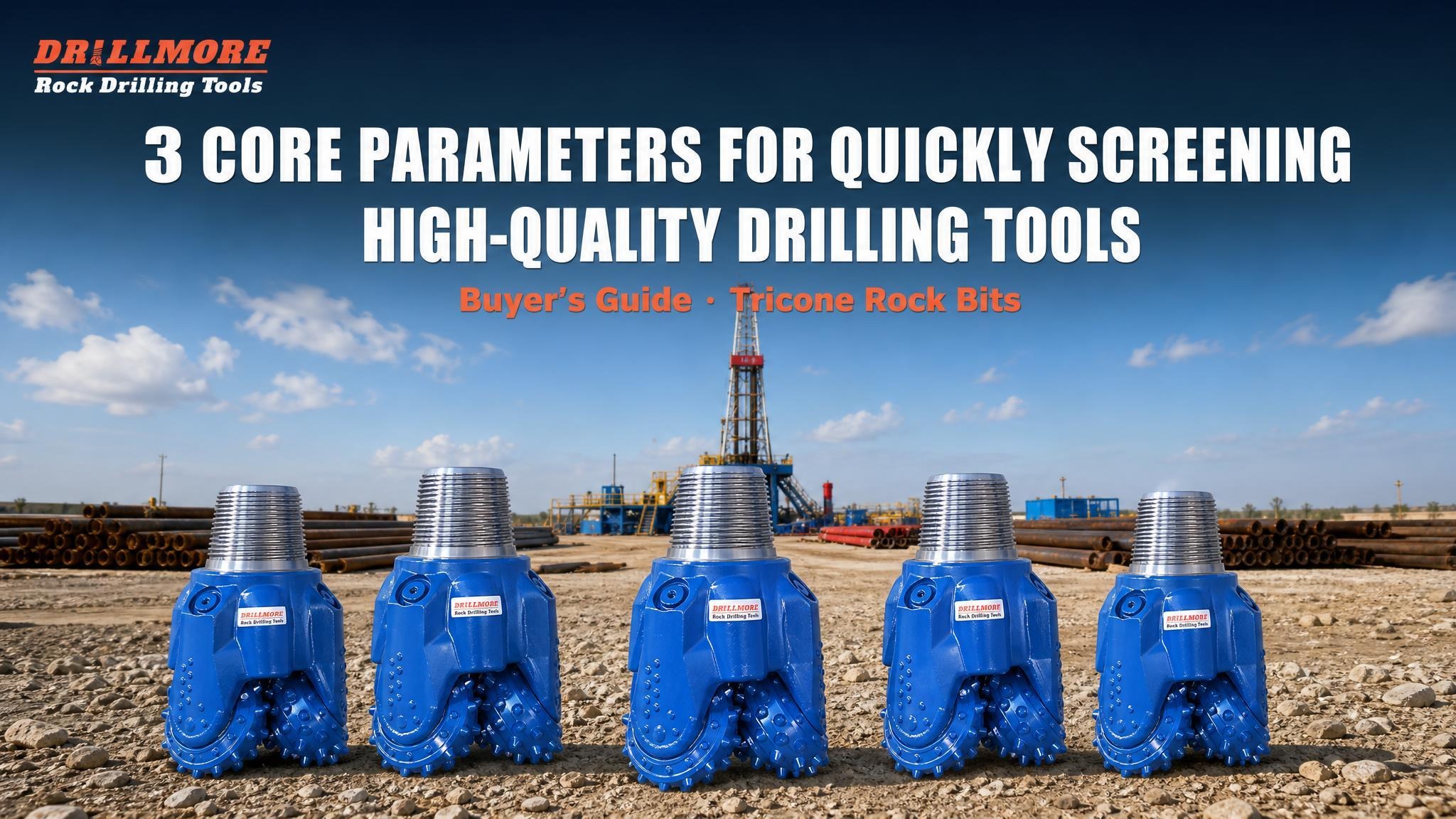
3 Core Parameters for Quickly Screening High-Quality Drilling Tools
If you buy drilling tools for engineering drilling projects, chances are you have run into the pitfalls of tool selection. The market is full of models, and prices vary widely. For the same type of drill bit, a low-priced off-brand product and a high-end precision-engineered product can differ by more than 100%. Looking only at surface finish and coating color, it is almost impossible to tell quality apart.
Many new buyers fall into two extremes. Some push for the lowest price and choose low-end products. Once on the rig, these tools wear too fast, drill inefficiently, and fail frequently, delaying the construction schedule. Others blindly buy expensive high-end tools that do not match the site’s formation or equipment conditions, leaving resources idle and wasting money. In fact, buying drilling tools is not about luck or simply comparing prices. The key is matching parameters.
Experienced buyers who have achieved zero-error purchasing and tight control of consumable costs for years are not necessarily more gifted. They simply focus on three core parameters. Even a newcomer who understands these key indicators can avoid 90% of poor-quality drilling tools on the market and choose cost-effective products that fit the site, last longer, and cause fewer headaches.
In everyday purchasing, most low-quality drilling tools are “visually misleading.” They look neat and bright enough and are almost indistinguishable from genuine precision-made products. However, their core materials and process parameters are seriously cut down. This is a major cause of later construction failures, schedule delays, and consumable cost overruns. Many newcomers focus only on size, style, and price, while ignoring the hard specifications that determine tool service life and drilling efficiency.
Body Material and Hardness: Matching the Formation Is the Foundation
The tool body is the core load-bearing component and the main barrier against wear. Its material directly determines the tool’s overall service life and durability. High-quality drilling tools generally use high-strength alloy steel as the body and undergo overall quenching and tempering heat treatment. This gives balanced toughness, excellent impact resistance, and good compression resistance, so the tool is less likely to deform or crack during drilling and is suitable for long, continuous operation.
By contrast, low-end, poor-quality tools are mostly made from recycled scrap steel or ordinary carbon steel. Their material composition is unstable, and hardness varies from point to point. When working in hard rock or broken formations, they are prone to tooth chipping, twisting, and breakage. This not only affects construction but also creates safety risks.
Buyers do not need professional testing equipment. They just need to match the tool to the job. For soft soil or ordinary weathered rock, choose a medium-hardness body to ensure smooth cuttings removal and efficient drilling. For granite and highly abrasive hard rock, prioritize a high-hardness, high-toughness alloy body to avoid common problems such as rapid wear and tooth loss from the start.
Working Layer Process Parameters: The Direct Driver of Drilling Efficiency
Many job sites wonder why drilling tools of the same specification and material perform so differently. Some drill steadily and last long on the rig, while others frequently stall and burn easily. The root cause lies in the process details of the bit’s working layer.
In high-quality tools, the diamond or alloy working layer has uniform particle distribution, consistent density, and appropriate embedding depth. The matrix formula has been adjusted and tested for multiple working conditions. This ensures both cutting sharpness and good wear resistance, making the tool suitable for various common working conditions.
Low-end defective products have obvious problems: uneven particle density, thin surface coating, and poorly controlled matrix hardness. Sparse particles lead to insufficient cutting force and slow penetration. Disorderly distribution causes uneven stress and rapid local wear. If the matrix is too hard, the bit can pack and burn its teeth; if it is too soft, wear speed doubles and service life drops sharply. During purchasing verification, focus on the uniformity of the working layer and the matching matrix parameters. This can directly screen out process-defective products.
Thread Machining Accuracy: Avoiding Assembly and Construction Risks
Threads are the key part for force transmission and load bearing in drilling tools, and they are also the core parameter most easily overlooked by new buyers. Most drilling tool failures on site are not caused by the quality of the bit body itself, but by a chain of failures triggered by inadequate thread machining accuracy.
Poor-quality drilling tools have rough threads, large pitch deviation, and inadequate coaxiality. After installation, the thread engagement is loose and stress is uneven. During high-speed drilling, this can easily lead to loosening, slurry leakage, and hole deviation or wobble. In severe cases, it can cause thread stripping or breakage, resulting in equipment downtime and scrapped holes.
Qualified engineering drilling tools use standardized precision thread machining. The thread profile is regular, coaxiality is accurate, and the engagement area is sufficient. They fit common rig interfaces on the market, are easy to assemble and disassemble, and engage tightly for stable operation. For deep wells and frequent high-load operations, choose double-shoulder threads. They offer stronger torque resistance and can handle complex construction conditions more effectively.
For new buyers, there is no need to chase complicated brand hype or redundant parameters. Focus on three core dimensions: body material, working layer process, and thread accuracy. Then match them precisely to the site’s formation conditions, operating depth, and equipment model. This will help you leave blind purchasing behind. You will not fall into the low-price trap and buy poor-quality consumables, nor will you waste money on high-end products that do not fit the job. The result is zero-error purchasing, efficient construction, and long consumable life.
Alamat email sampeyan ora bakal diterbitake. Kolom sing dibutuhake diwenehi tandha *


